Basement Flooding Cleanup in Loveland, CO
A finished Loveland basement holds carpet, pad, drywall and framing that all soak up water fast. The restoration team extracts it, opens only what the meters call for and dries the level to a verified reading.
(888) 532-8620Pump out and dry a Loveland basement- 24/7 dispatch
- Truck-mounted extraction
- Daily moisture readings
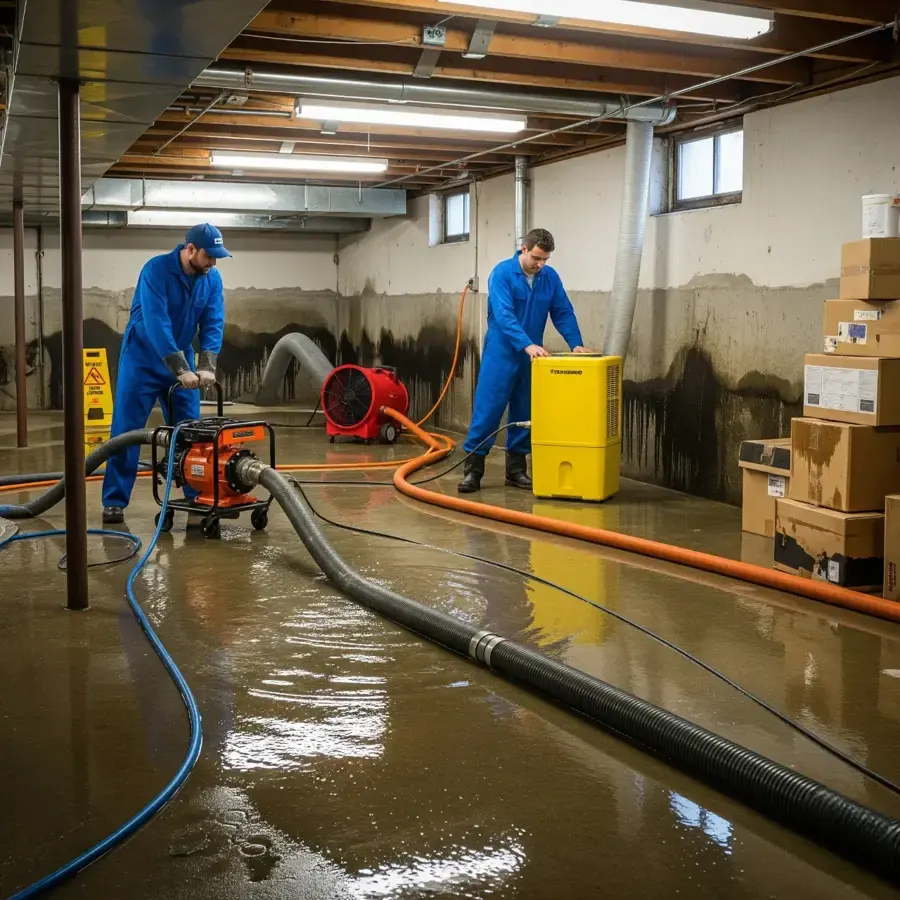
First steps for basement flooding cleanup in Loveland
- Keep off wet carpet near outlets
Basement outlets sit low, so stay clear of standing water near cords, the furnace and the water heater.
- Find where it came in
Note whether water came from a window well, the sump pit, a wall crack or a pipe. It changes the category.
- Move stored items up
Boxes on the floor wick water fast. Lift them onto shelves or carry them upstairs.
- Call before it wicks
Drywall wicks water upward for hours, so extraction that starts right away keeps the flood cut lower.
How basement flooding cleanup is handled in Loveland, CO
Category decides the plan
Clean supply-line water can often be dried in place. Groundwater and surface water are handled as Category 2 or 3, which means more removal.
Flood cuts only where needed
The mitigation team measures how high water wicked and cuts drywall a few inches above that line, not a blanket four feet.
Closed-room drying
Basements dry best as a closed drying chamber with LGR dehumidifiers pulling moisture out of the air day and night.
What does basement flooding cleanup cost in Loveland, CO?
In Loveland, CO, basement flooding cleanup typically runs $1,500 to $20,000 or more. The biggest drivers are how many rooms are finished, the water category, how much carpet, pad and drywall has to come out and how quickly drying started.
Partial basement, clean water
- One or two rooms
- Extraction and in-place drying
- Pad replacement
Full finished basement
- Flood cuts and baseboard removal
- Multiple dehumidifiers
- Daily readings for the claim
Groundwater or contaminated
- Category 2 or 3 protocol
- Carpet and drywall removal
- Antimicrobial and full drying
Ranges only, not a quote. The drivers are the water category, the square footage, the material class and how fast drying started. For a planning number, try the water damage cost calculator.
Why Loveland basements flood
Loveland grew fast between the 1970s and the 2000s, and most of those homes were built with full basements, many of them finished later with carpet, drywall and a bedroom or two. Water enters a basement a handful of ways here: a sump pump that fails during the spring groundwater rise, an egress window well that fills in a July thunderstorm, a crack in a foundation that moved on expansive clay soil, or a supply line or water heater that lets go inside the utility room.
Neighborhoods near Lake Loveland, Boyd Lake and the irrigation ditches carry a higher water table through the summer, so the same basement can take water two or three times a season when the pump or grading is not keeping up.
Trade fact: water that comes through a foundation wall or window well has touched soil, so it is treated as Category 2 at minimum. Porous materials it soaked, like carpet pad and the bottom of the drywall, usually come out instead of being dried.
What a basement dry-out looks like
- Extraction of standing water from slab, carpet and pad.
- Moisture mapping of walls, bottom plates and any framed-in rooms.
- Removal of baseboard, wet pad and drywall above the wick line where readings call for it.
- A closed drying chamber with LGR dehumidifiers and air movers, plus desiccant units when a cold basement slows refrigerant drying.
- Daily readings recorded until the framing and slab reach the drying goal.
Keeping the next one out
After the dry-out, the fixes that matter most are a working sump with a battery backup, window well covers and grading that sends water away from the foundation. The City of Loveland publishes local stormwater and flood information, and FloodSmart.gov explains how flood insurance treats basements, which is narrower than most people expect.
The basement flooding cleanup process, step by step
- 01
Map the moisture
The tech who does the walkthrough maps the wet area with pinless meters and thermal imaging before any equipment goes down, so the basement flooding cleanup plan matches what is actually wet.
- 02
Extract and remove
The extraction crew pulls standing water with truck-mounted extraction, then removes only what cannot be dried, such as saturated pad or Category 3 drywall.
- 03
Dry to the goal
The drying team sets air movers and LGR dehumidifiers to the evaporation load of each room and records readings every day.
- 04
Verify and document
Equipment comes out when readings land within 2 to 4 points of a dry reference, and the drying log, photos and moisture map go into the claim file.
Basement Flooding Cleanup across Loveland and nearby towns
The restoration team covers all three Loveland ZIPs and the surrounding south Larimer County towns.
The restoration team works across Loveland, Berthoud, Campion, Johnstown, Masonville, Windsor and south Fort Collins, from the Big Thompson Canyon mouth to Boyd Lake.
805378053880539
See every neighborhood and town coveredBasement Flooding Cleanup questions in Loveland, CO
Can a finished basement be dried without tearing everything out?
Often, when the water was clean and extraction started quickly. The drywall is opened only where readings show water wicked into it, and framing is dried in place. Groundwater or sewage changes that, because contaminated porous materials are removed.
How high do the flood cuts go?
It depends on how high the water wicked. The mitigation team measures the wet line with meters and usually cuts a few inches above it. A blanket four foot cut is only needed on deep or contaminated flooding.
Why does my basement smell musty after it dried?
A musty smell usually means something is still wet, often the bottom plate, the pad under carpet or insulation behind the drywall. Readings against a dry reference find it, and drying continues until the wet material reaches the goal.
Is basement flooding covered by insurance?
Water from a burst pipe or a failed appliance is often covered after the deductible. Groundwater and sump overflow usually need a specific water backup endorsement, and surface flooding falls under flood insurance. Coverage depends on your policy, so ask your insurer.
How long does a flooded basement take to dry?
A basement with a few wet rooms usually dries in three to five days. Cold slabs, dense framing and multiple layers of flooring can add a few days. The equipment comes out when the readings say dry.
Should the carpet be pulled right away?
Not always. On clean water, carpet can often be extracted and dried in place while the pad is replaced. On groundwater, flood water or sewage, carpet and pad are removed.
What causes the most basement floods in Loveland?
Sump pump failures during spring groundwater, window wells filling in summer storms, and supply line or water heater failures in the utility room. Frozen lines in exterior walls add winter losses.
Basement Flooding Cleanup in Loveland? Call now.
The longer basement flooding cleanup sits, the deeper the water wicks into drywall, framing and subfloor. The restoration team is on call 24/7 across Loveland and south Larimer County.