Sewage Backup Cleanup in Loveland, CO
Sewage backup is Category 3 the moment it happens. The mitigation team contains the area, removes everything porous it touched, treats the surfaces and dries the structure.
(888) 532-8620Sewage in the basement? Call for Loveland cleanup- 24/7 dispatch
- Truck-mounted extraction
- Daily moisture readings
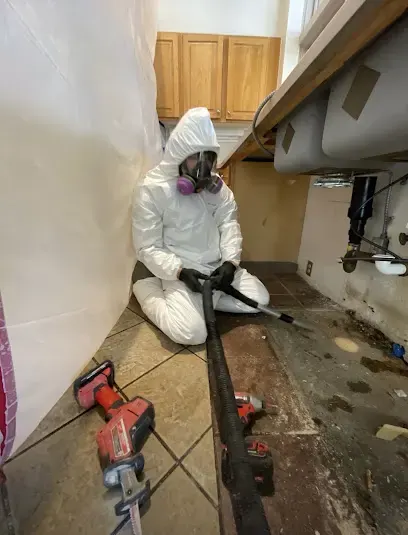
First steps for sewage backup cleanup in Loveland
- Stop using water
Do not flush, shower or run the washer; every drain adds to the backup.
- Keep people and pets out
Close the door to the area and keep children away.
- Do not run the HVAC over it
If the furnace or return is in the affected area, turn the system off.
- Avoid bleach and fans
Mixing cleaners is dangerous, and fans spread contaminated droplets.
How sewage backup cleanup is handled in Loveland, CO
Containment first
The response team sets plastic containment and negative air with HEPA air scrubbers before removal starts.
Remove, do not dry
Carpet, pad, drywall, insulation and upholstered items touched by sewage are removed and bagged, per Category 3 protocol.
Clean, treat, then dry
Surfaces are cleaned, an EPA-registered antimicrobial is applied at its dwell time, and only then does drying start.
What does sewage backup cleanup cost in Loveland, CO?
In Loveland, CO, sewage backup cleanup typically runs $2,000 to $25,000 or more. The drivers are how far the sewage spread, how much finished material must be removed, the square footage and whether containment and HEPA air scrubbers run for several days.
Small area, hard floors
- Containment and PPE
- Removal and cleaning
- Antimicrobial treatment
Finished basement room
- Carpet, pad, drywall removal
- HEPA air scrubbers
- Structural drying
Large or multi-room backup
- Several rooms and closets
- Cabinet and fixture removal
- Extended drying and monitoring
Ranges only, not a quote. The drivers are the water category, the square footage, the material class and how fast drying started. For a planning number, try the water damage cost calculator.
Why sewage backs up in Loveland basements
A basement floor drain or toilet is the lowest opening on the sewer line, so that is where a backup appears. In older downtown Loveland homes, clay and cast iron lateral lines crack and let tree roots in. In newer homes, grease, wipes and debris cause most blockages. Heavy summer rain can also overload the municipal system and push water back up through a floor drain that has no backwater valve.
- Tree roots in clay or cast iron lateral lines.
- Grease and wipes building a blockage in the main.
- A collapsed or bellied section of the sewer line.
- Storm surges that back up through floor drains.
Trade fact: sewage backup is Category 3 the moment it happens. Porous materials touched by Category 3 water get removed, not dried. PPE minimums include gloves, eye protection, a respirator and disposable coveralls.
How a sewage cleanup is run
The mitigation team isolates the affected area with plastic containment and runs HEPA air scrubbers under negative pressure so contaminated air does not move into clean rooms. Standing sewage is extracted, then carpet, pad, drywall to a safe height above the water line, insulation and other porous materials are removed and bagged. Hard surfaces are cleaned, an EPA-registered antimicrobial is applied and left for its full dwell time, and structural drying runs until readings reach the goal. Flood water from outside gets the same treatment under flood water cleanup.
Health, insurance and prevention
A plumber clears and repairs the line; the restoration work is separate. The EPA sanitary sewer overflow page explains the health risks, and the OSHA flood cleanup page lists the protective gear used around contaminated water. Many policies cover sewer backup only with a specific endorsement, so check with your own insurer. A backwater valve on the main line is the best long-term protection, and structural drying finishes every sewage job.
The sewage backup cleanup process, step by step
- 01
Map the moisture
The tech who does the walkthrough maps the wet area with pinless meters and thermal imaging before any equipment goes down, so the sewage backup cleanup plan matches what is actually wet.
- 02
Extract and remove
The extraction crew pulls standing water with truck-mounted extraction, then removes only what cannot be dried, such as saturated pad or Category 3 drywall.
- 03
Dry to the goal
The drying team sets air movers and LGR dehumidifiers to the evaporation load of each room and records readings every day.
- 04
Verify and document
Equipment comes out when readings land within 2 to 4 points of a dry reference, and the drying log, photos and moisture map go into the claim file.
Sewage Backup Cleanup across Loveland and nearby towns
The restoration team covers all three Loveland ZIPs and the surrounding south Larimer County towns.
The restoration team works across Loveland, Berthoud, Campion, Johnstown, Masonville, Windsor and south Fort Collins, from the Big Thompson Canyon mouth to Boyd Lake.
805378053880539
See every neighborhood and town coveredSewage Backup Cleanup questions in Loveland, CO
Why is sewage cleanup different from other water damage?
Sewage is Category 3 water that carries bacteria and viruses. Porous materials it touched are removed instead of dried, the area is contained with HEPA air scrubbers, and surfaces are treated with an EPA-registered antimicrobial before drying.
Can carpet be cleaned after a sewage backup?
No. Carpet and pad touched by sewage are removed and discarded. Hard surfaces like tile, concrete and sealed wood can be cleaned and disinfected.
Is sewage backup covered by homeowners insurance?
Often only with a sewer or water backup endorsement. Without one, many policies exclude it. Coverage depends on your policy, so it is worth checking with your own insurer.
Is it safe to stay in the house?
Usually yes, away from the contained area, as long as the HVAC is not pulling air from it. Children, older adults and anyone with a weakened immune system should stay well away from the work area.
Should I pour bleach on it?
No. Bleach does not treat porous materials, and mixing cleaners can release toxic gas. Leave treatment to the mitigation team using EPA-registered antimicrobial products.
How can I stop it from happening again?
Have a plumber camera the lateral line, clear roots, fix bellied or cracked sections and consider a backwater valve on the main line. Keep grease and wipes out of the drains.
How long does sewage cleanup take?
Removal and treatment usually take one to two days, then structural drying runs three to five days for most losses.
Sewage Backup Cleanup in Loveland? Call now.
The longer sewage backup cleanup sits, the deeper the water wicks into drywall, framing and subfloor. The restoration team is on call 24/7 across Loveland and south Larimer County.