Burst Pipe Cleanup in Loveland, CO
A burst supply line can put hundreds of gallons into a house before anyone finds it. The extraction crew pulls the water out and the drying team dries every cavity it reached.
(888) 532-8620Burst line? Start the Loveland extraction- 24/7 dispatch
- Truck-mounted extraction
- Daily moisture readings
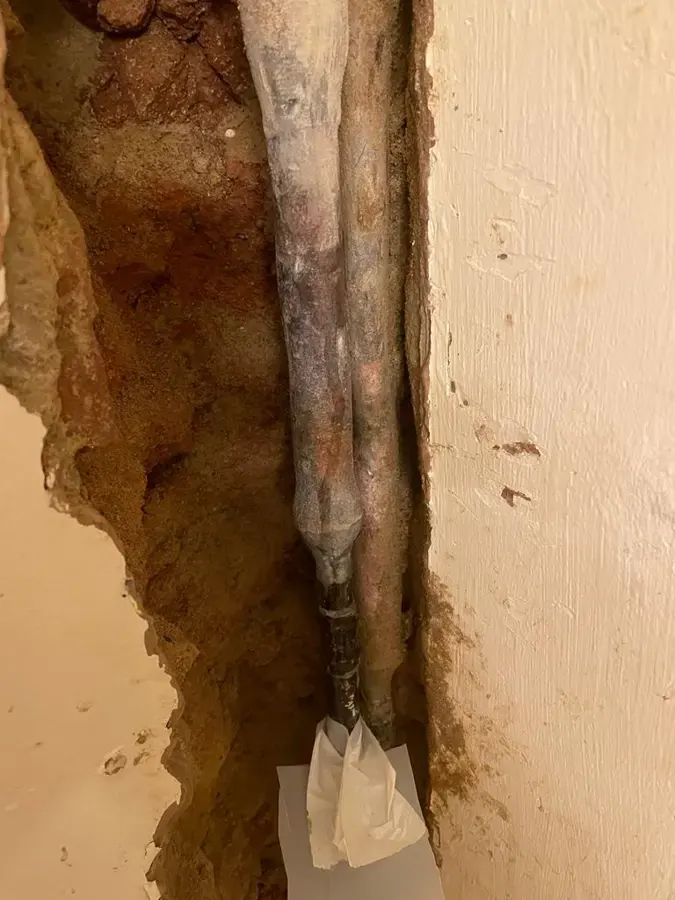
First steps for burst pipe cleanup in Loveland
- Shut the main
Find the main valve where the service line enters, usually in the basement on the street side.
- Kill power to wet circuits
If water is near fixtures or the panel is dry, switch off the affected circuits.
- Catch ceiling water
Poke a small hole in a bulging ceiling with a bucket below so it drains instead of collapsing.
- Photograph everything
Wide photos first, then close-ups of the pipe and the wettest spots.
How burst pipe cleanup is handled in Loveland, CO
Volume first
The extraction crew removes standing water from every level with truck-mounted extraction before drying equipment goes in.
Follow the water down
Water from a burst line follows framing, ducts and wiring holes, so the tech who does the walkthrough maps each floor below the break.
Documented dry-out
Daily readings, the moisture map and pre-demolition photos go into the file the adjuster reviews.
What does burst pipe cleanup cost in Loveland, CO?
In Loveland, CO, burst pipe cleanup typically runs $1,000 to $18,000 or more, depending on how long the line ran, how many rooms and floors got wet, how much drywall and flooring must come out and how fast drying started.
Caught early, one area
- Extraction
- Baseboard and drywall access
- Three to four days drying
Two floors or several rooms
- Ceiling and wall removal
- Pad and subfloor drying
- Multiple LGR units
Long-running or whole level
- Hardwood and cabinet drying
- Extensive demolition
- Full structural drying
Ranges only, not a quote. The drivers are the water category, the square footage, the material class and how fast drying started. For a planning number, try the water damage cost calculator.
Burst pipes are not only a winter problem
Freezing causes many Loveland pipe failures, but plenty happen in July too. Older galvanized and early copper lines in downtown homes corrode from the inside, polybutylene lines in some 1978 to 1995 houses fail at the fittings, and a water pressure spike can split a weak joint any day of the year. A supply line runs at full household pressure, so a failure keeps flowing until someone shuts the main.
- Corroded galvanized or pinholed copper in older homes.
- Polybutylene supply lines and their crimp fittings.
- Failed PEX fittings or a nail through a line during remodeling.
- A line that froze earlier and finally gave way.
Trade fact: Class 1 through 4 sets how much equipment a room needs. A burst line that soaks a ceiling, walls and hardwood is usually Class 3 or 4, which calls for more dehumidification and sometimes desiccants.
How the cleanup is organized
Extraction comes first on every level. Then the mitigation team opens ceilings that hold water, removes saturated insulation, and decides which drywall can be dried in place and which has to go. Air movers and LGR dehumidifiers run to the evaporation load of each room, and the readings are logged daily until the drying goal is met. Hardwood and cabinets get their own drying setup. See structural drying for how that works, and frozen pipe cleanup for winter splits inside exterior walls.
After the water is out
Reconstruction is a separate phase that starts once the structure is dry. The Colorado Division of Insurance explains how homeowners claims work in Colorado, and the EPA moisture overview covers why drying within 24 to 48 hours matters.
The burst pipe cleanup process, step by step
- 01
Map the moisture
The tech who does the walkthrough maps the wet area with pinless meters and thermal imaging before any equipment goes down, so the burst pipe cleanup plan matches what is actually wet.
- 02
Extract and remove
The extraction crew pulls standing water with truck-mounted extraction, then removes only what cannot be dried, such as saturated pad or Category 3 drywall.
- 03
Dry to the goal
The drying team sets air movers and LGR dehumidifiers to the evaporation load of each room and records readings every day.
- 04
Verify and document
Equipment comes out when readings land within 2 to 4 points of a dry reference, and the drying log, photos and moisture map go into the claim file.
Burst Pipe Cleanup across Loveland and nearby towns
The restoration team covers all three Loveland ZIPs and the surrounding south Larimer County towns.
The restoration team works across Loveland, Berthoud, Campion, Johnstown, Masonville, Windsor and south Fort Collins, from the Big Thompson Canyon mouth to Boyd Lake.
805378053880539
See every neighborhood and town coveredBurst Pipe Cleanup questions in Loveland, CO
How much water can a burst pipe release?
A half-inch supply line at normal household pressure can move several gallons a minute, which adds up to hundreds of gallons an hour. That is why shutting the main comes before anything else.
Does the ceiling have to come down?
If water is pooling above the drywall or the ceiling is sagging, it is opened to drain and dry. Ceilings that got damp but hold no water can often be dried in place with readings to confirm.
Will my hardwood floors be saved?
Sometimes. Hardwood that is extracted quickly and dried with floor panels or mats can often be kept, though some cupping may remain. Floors that soaked for days are usually replaced.
Is a burst pipe covered by insurance?
Sudden and accidental discharge from a plumbing line is commonly covered after the deductible. The repair of the pipe itself is often treated separately. Coverage depends on your policy, so check with your own insurer.
How long does burst pipe drying take?
A contained loss usually dries in three to five days. Two-floor losses with ceilings, hardwood or plaster can take a week or more. Equipment leaves when readings say dry.
What documentation helps the claim?
Photos before any demolition, the moisture map from day one, daily drying logs, and the category and class of the loss. Ask the restoration contractor who responds what comes with the job.
Burst Pipe Cleanup in Loveland? Call now.
The longer burst pipe cleanup sits, the deeper the water wicks into drywall, framing and subfloor. The restoration team is on call 24/7 across Loveland and south Larimer County.