Water Extraction in Loveland, CO
Standing water keeps moving into drywall, trim and subfloor until it is pulled out. The extraction crew removes it with truck-mounted extraction and sets up drying the same visit.
(888) 532-8620Get the standing water out in Loveland- 24/7 dispatch
- Truck-mounted extraction
- Daily moisture readings
First steps for water extraction in Loveland
- Stop the source
Close the main shutoff, usually in the basement near the front foundation wall, or the valve behind the appliance.
- Cut power to wet rooms
Only if the breaker panel is dry and you can reach it without standing in water.
- Photograph first
Take wide and close photos of every wet room before anything is moved or thrown out.
- Lift what you can
Get rugs, boxes and furniture legs off the wet floor, then call to get extraction started.
How water extraction is handled in Loveland, CO
Moisture map first
The tech who does the walkthrough maps how far the water travelled under flooring and into walls, so extraction targets all of it.
Truck-mounted power
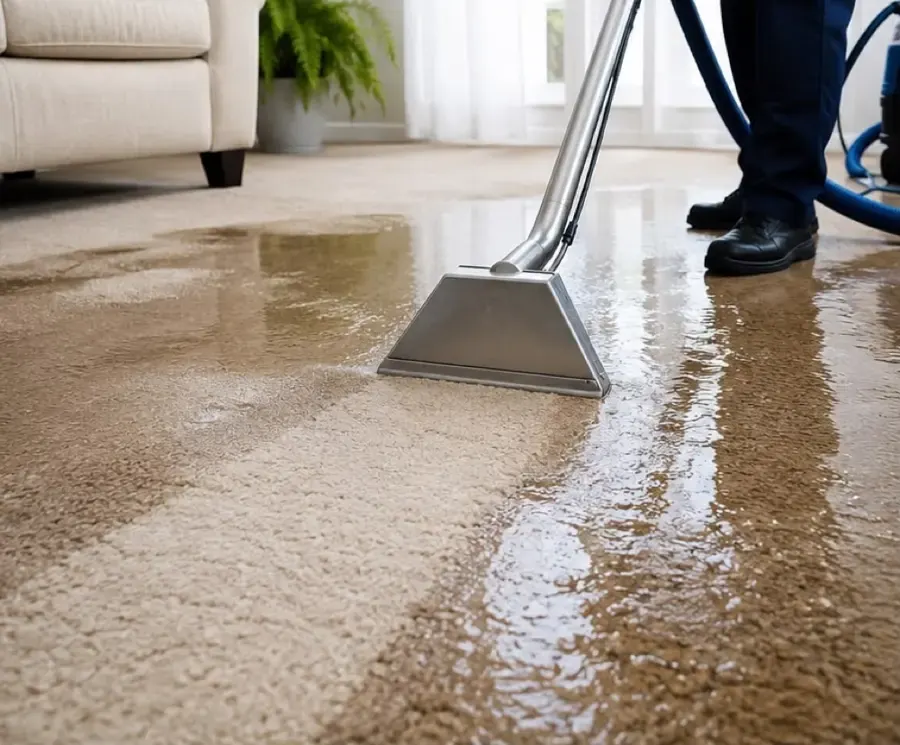
A truck-mounted unit moves far more water than a shop vac and sends it out of the house, not into the next room.
Weighted extraction on carpet
Weighted tools squeeze water out of carpet and pad, which cuts drying time and often saves the carpet on clean water.
What does water extraction and removal cost in Loveland, CO?
In Loveland, CO, water extraction typically runs $400 to $7,500 or more. The drivers are the water category, the square footage that is wet, whether carpet and pad are involved and how fast extraction started.
One room, clean water
- Single room or hallway
- Truck-mounted extraction
- Short drying setup
Several rooms or a basement
- Carpet and pad extraction
- Baseboard and wall checks
- Air movers and LGR dehumidifiers
Large or contaminated
- Category 2 or 3 water
- Pad and drywall removal
- Full structural drying
Ranges only, not a quote. The drivers are the water category, the square footage, the material class and how fast drying started. For a planning number, try the water damage cost calculator.
Why extraction speed matters in a Loveland home
Most Loveland houses built from the 1970s on have a finished basement, and water always finds the lowest level. A supply line that fails upstairs can push water down through the floor system in a few hours, into carpet pad, bottom plates and drywall. Every gallon that is pulled out as liquid is a gallon the drying equipment never has to evaporate, which is why the extraction crew starts with truck-mounted extraction before a single air mover goes down.
Clean water from a supply line does not stay clean. After a day or two at room temperature it can degrade to Category 2, and the drying plan changes with it. Fast extraction keeps more of the carpet, pad and trim salvageable.
Trade fact: the drying goal is not "looks dry". Crews compare readings in the wet material against a dry reference in an unaffected room, and the job is done when the wet side lands within 2 to 4 points of that reference.
What gets extracted and what gets removed
- Standing water on hard floors, tile and slab: extracted with squeegee and wand tools.
- Carpet and pad on clean water: weighted extraction, then the carpet is often floated and dried in place.
- Pad under Category 2 or 3 water: removed, because pad holds contamination that drying does not fix.
- Drywall wicking above the waterline: opened at the bottom edge or removed in a flood cut when readings call for it.
After extraction the drying team moves on to structural drying with air movers and LGR dehumidifiers. If the water came up from below, the cause may be a failed sump pump or a flooded window well, and each has its own fix.
Health and safety around standing water
Keep people and pets out of standing water near outlets, extension cords or a flooded furnace room. The EPA notes that indoor moisture should be dried within 24 to 48 hours to limit mold growth, which is the practical deadline behind every extraction job (see the EPA moisture and mold overview). For river or storm water, Ready.gov flood safety explains why flood water is treated as contaminated.
The water extraction process, step by step
- 01
Map the moisture
The tech who does the walkthrough maps the wet area with pinless meters and thermal imaging before any equipment goes down, so the water extraction plan matches what is actually wet.
- 02
Extract and remove
The extraction crew pulls standing water with truck-mounted extraction, then removes only what cannot be dried, such as saturated pad or Category 3 drywall.
- 03
Dry to the goal
The drying team sets air movers and LGR dehumidifiers to the evaporation load of each room and records readings every day.
- 04
Verify and document
Equipment comes out when readings land within 2 to 4 points of a dry reference, and the drying log, photos and moisture map go into the claim file.
Water Extraction and Removal across Loveland and nearby towns
The restoration team covers all three Loveland ZIPs and the surrounding south Larimer County towns.
The restoration team works across Loveland, Berthoud, Campion, Johnstown, Masonville, Windsor and south Fort Collins, from the Big Thompson Canyon mouth to Boyd Lake.
805378053880539
See every neighborhood and town coveredWater Extraction and Removal questions in Loveland, CO
How fast does water need to be extracted?
As soon as possible. Water keeps wicking into drywall, trim and subfloor, and indoor moisture that sits for 24 to 48 hours is the usual window for mold growth. Extraction first, then drying, is the order that limits damage.
Can a shop vac do the job?
A shop vac handles a small puddle on a hard floor. It cannot pull water out of carpet pad or move the volume a flooded basement holds, and emptying it by hand spreads water around. Truck-mounted extraction removes far more water per pass and sends it outside.
Will my carpet be saved?
Often, on clean Category 1 water that is extracted quickly. The pad under it is frequently replaced because it holds water. Carpet touched by sewage or flood water is removed, because porous materials in Category 3 water are not dried and reused.
How long does drying take after extraction?
A contained Class 1 or 2 loss usually dries in three to five days with air movers and LGR dehumidifiers running. Hardwood, plaster and multi-layer floors take longer. The equipment stays until the readings say dry.
Does homeowners insurance cover water extraction?
Sudden and accidental discharge, such as a burst supply line, is commonly covered after the deductible. Rising surface water from a river or storm usually falls under flood coverage instead. Coverage depends on your policy, so check with your own insurer.
What should I do before the extraction crew gets to work?
Shut off the water, cut power to wet rooms if the panel is dry, photograph everything, and lift rugs and small furniture off the floor. Do not use a household vacuum on standing water.
Water Extraction and Removal in Loveland? Call now.
The longer water extraction sits, the deeper the water wicks into drywall, framing and subfloor. The restoration team is on call 24/7 across Loveland and south Larimer County.