Structural Drying & Dehumidification in Loveland, CO
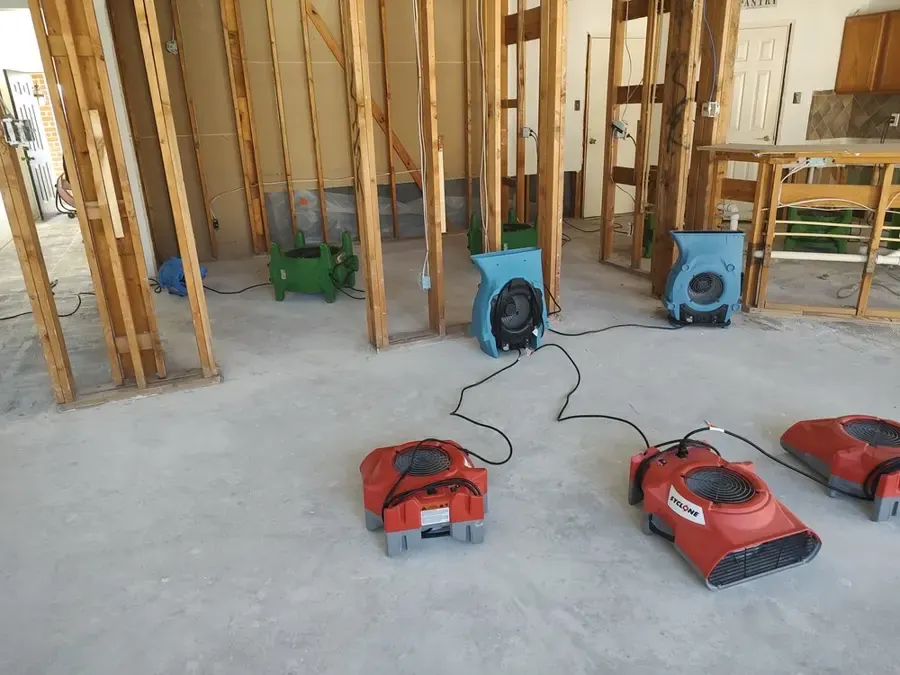
Surface drying is not structural drying. The drying team dries the framing, subfloor and wall cavities to a measured goal and keeps the equipment running until readings confirm it.
(888) 532-8620Get the Loveland drying started today- 24/7 dispatch
- Truck-mounted extraction
- Daily moisture readings
First steps for structural drying in Loveland
- Keep the heat on
A warm house dries faster. Leave the furnace running unless the ducts took water.
- Close windows
Outside air is not controlled; the drying team manages humidity inside.
- Leave equipment running
Turning off air movers or dehumidifiers at night slows the dry-out.
- Watch for new stains
Report any stain that grows or a musty smell during drying.
How structural drying is handled in Loveland, CO
Class sets the equipment
Class 1 through 4 describes how much wet material and how dense it is, which sets how many air movers and dehumidifiers each room needs.
LGR and desiccants
LGR dehumidifiers pull moisture from warm air; desiccant units handle cold basements and dense Class 4 materials like hardwood and concrete.
Psychrometric logs
The drying team records temperature, relative humidity and grains per pound every day to prove the air is pulling water out.
What does structural drying and dehumidification cost in Loveland, CO?
In Loveland, CO, structural drying typically runs $1,000 to $15,000 or more. The drivers are the class of the loss, the square footage, the number of air movers and dehumidifiers needed, dense materials like hardwood or plaster, and how many days the equipment runs.
Class 1 or 2, a few rooms
- Air movers and one LGR unit
- Daily readings
- Three to four days
Class 3, most of a level
- Several LGR units
- Cavity and ceiling drying
- Psychrometric logs
Class 4 or two levels
- Desiccant dehumidifiers
- Hardwood and slab drying
- Extended monitoring
Ranges only, not a quote. The drivers are the water category, the square footage, the material class and how fast drying started. For a planning number, try the water damage cost calculator.
What structural drying actually means
A wet room can look dry in a day while the framing, subfloor and bottom plates still hold water. Structural drying treats the building as a drying chamber: the drying team measures how wet each material is, sets air movers to move air across wet surfaces, and uses dehumidifiers to pull the evaporated water out of the air. IICRC S500 is the industry drying standard that describes this process, and the goal is a measured one.
Trade fact: the drying goal is within 2 to 4 points of a dry reference material in an unaffected part of the same building. Equipment comes out when the readings get there, not on a fixed schedule.
The equipment and why each piece is there
- Air movers set to the evaporation load of each room, aimed along walls and under cabinets.
- LGR (low grain refrigerant) dehumidifiers that pull more water from the air than standard units.
- Desiccant dehumidifiers for cold basements and dense Class 4 materials like hardwood and concrete.
- Injection systems and floor mats that push dry air into wall cavities and under hardwood.
- Thermal imaging and pinless meters to find water behind finished surfaces.
Loveland air is dry most of the year, which helps, but a basement slab in January is cold, and cold slows refrigerant dehumidifiers. That is when desiccants earn their place. Drying follows water extraction on every loss, and burst pipe losses often need several days of it.
How long it takes and how it is proven
A contained Class 1 or 2 loss usually dries in three to five days. Hardwood, plaster and multi-layer floors take longer. Daily moisture readings and psychrometric logs show the progress and go into the claim file. The EPA explains why prompt drying limits mold, and Colorado State University Extension covers indoor humidity in Colorado homes.
The structural drying process, step by step
- 01
Map the moisture
The tech who does the walkthrough maps the wet area with pinless meters and thermal imaging before any equipment goes down, so the structural drying plan matches what is actually wet.
- 02
Extract and remove
The extraction crew pulls standing water with truck-mounted extraction, then removes only what cannot be dried, such as saturated pad or Category 3 drywall.
- 03
Dry to the goal
The drying team sets air movers and LGR dehumidifiers to the evaporation load of each room and records readings every day.
- 04
Verify and document
Equipment comes out when readings land within 2 to 4 points of a dry reference, and the drying log, photos and moisture map go into the claim file.
Structural Drying and Dehumidification across Loveland and nearby towns
The restoration team covers all three Loveland ZIPs and the surrounding south Larimer County towns.
The restoration team works across Loveland, Berthoud, Campion, Johnstown, Masonville, Windsor and south Fort Collins, from the Big Thompson Canyon mouth to Boyd Lake.
805378053880539
See every neighborhood and town coveredStructural Drying and Dehumidification questions in Loveland, CO
What is the IICRC S500?
It is the industry standard for professional water damage restoration. It describes how to assess water category and class, how to extract, how to dry and how to confirm the structure is dry.
Why can't I just use fans?
Household fans move air but do not remove moisture from it, so the water just moves into other rooms and materials. Structural drying pairs air movers with dehumidifiers and measures the result.
How is dry actually measured?
The drying team takes moisture readings in the wet materials and compares them to a dry reference of the same material elsewhere in the building. Dry means within 2 to 4 points of that reference.
How long will the equipment be in my house?
Usually three to five days for a contained loss, longer for hardwood, plaster or two-level losses. It stays until the readings reach the goal.
Is the equipment loud?
Air movers and dehumidifiers are noticeable, similar to several box fans running. Turning them off slows drying, so it is best to leave them running day and night.
What is the difference between LGR and desiccant dehumidifiers?
LGR units use refrigeration and work best in warm rooms. Desiccant units use a moisture-absorbing wheel and keep working in cold basements and on dense materials.
Structural Drying and Dehumidification in Loveland? Call now.
The longer structural drying sits, the deeper the water wicks into drywall, framing and subfloor. The restoration team is on call 24/7 across Loveland and south Larimer County.