Frozen Pipe Cleanup in Loveland, CO
A pipe that froze overnight often splits and floods only when it thaws. The restoration team extracts the water and dries inside the wall cavity where the leak ran.
(888) 532-8620Frozen line split in Loveland? Call now- 24/7 dispatch
- Truck-mounted extraction
- Daily moisture readings
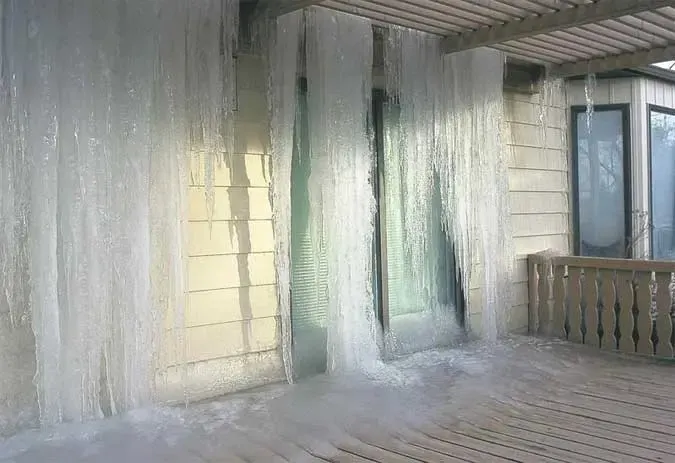
First steps for frozen pipe cleanup in Loveland
- Shut the main right away
A split line can move hundreds of gallons an hour once it thaws.
- Open the faucets
Relieve pressure and let the remaining water drain out of the system.
- Keep heat on
Warm the area gently; never thaw a pipe with an open flame.
- Note the thaw point
Where the water shows up is not always where the split is. Note both for the tech.
How frozen pipe cleanup is handled in Loveland, CO
Find the split with thermal imaging
Frozen splits hide inside exterior walls and ceilings. Thermal imaging and pinless meters show where the water ran before anything is opened.
Open small, dry inside
The drying team often opens a small access or drills weep holes and injects dry air into the cavity instead of removing whole walls.
Watch the ceiling below
A split in an upstairs bath or attic line floods the ceiling below, so ceiling drywall and insulation get read too.
What does frozen pipe cleanup cost in Loveland, CO?
In Loveland, CO, frozen pipe cleanup typically runs $1,000 to $15,000 or more. The drivers are how long the line ran after thawing, how many floors the water crossed, whether ceilings and insulation soaked through and how fast drying started.
One wall or closet
- Extraction and wall readings
- Small access openings
- Cavity drying
Multi-room or two floors
- Ceiling and wall removal
- Insulation removal
- Multiple dehumidifiers
Long-running or vacant home
- Days of unnoticed flow
- Subfloor and framing drying
- Full structural dry-out
Ranges only, not a quote. The drivers are the water category, the square footage, the material class and how fast drying started. For a planning number, try the water damage cost calculator.
Why pipes freeze in Loveland
Loveland sits right at the base of the foothills, and arctic air that drops down the Front Range can push overnight lows well below zero for several nights in a row. Supply lines that run through exterior walls, garage ceilings, crawlspaces and cantilevered floors are the first to freeze, along with hose bibs and irrigation backflow preventers that were not blown out in the fall. West-side homes near Mariana Butte and the canyon mouth take the coldest air first.
A frozen line usually does not leak while it is frozen. The ice expands, the pipe splits, and the leak starts when the house warms up, which is why so many frozen pipe calls come in mid-morning after a cold night.
Trade fact: clean supply water is Category 1, so most materials it soaked can be dried in place if drying starts quickly. The same water left for days can degrade to Category 2, which means more removal.
How the in-wall dry-out works
- Thermal imaging and pinless meters trace where the water ran inside the wall and ceiling.
- Small access holes or weep holes let dry air into the cavity without tearing out full walls.
- Wet insulation is removed, because fiberglass holds water and will not dry in place.
- LGR dehumidifiers and air movers run until the framing reads within 2 to 4 points of a dry reference.
If the split was large and the water ran for hours, the job looks more like a burst pipe cleanup, with ceiling removal and structural drying across several rooms.
Protecting pipes before the next cold snap
Insulate lines in exterior walls and garages, disconnect hoses, blow out sprinkler lines before the first hard freeze and keep cabinet doors open on the coldest nights. Ready.gov winter weather has a short checklist, and the National Weather Service Boulder office posts the cold warnings for Larimer County.
The frozen pipe cleanup process, step by step
- 01
Map the moisture
The tech who does the walkthrough maps the wet area with pinless meters and thermal imaging before any equipment goes down, so the frozen pipe cleanup plan matches what is actually wet.
- 02
Extract and remove
The extraction crew pulls standing water with truck-mounted extraction, then removes only what cannot be dried, such as saturated pad or Category 3 drywall.
- 03
Dry to the goal
The drying team sets air movers and LGR dehumidifiers to the evaporation load of each room and records readings every day.
- 04
Verify and document
Equipment comes out when readings land within 2 to 4 points of a dry reference, and the drying log, photos and moisture map go into the claim file.
Frozen Pipe Cleanup across Loveland and nearby towns
The restoration team covers all three Loveland ZIPs and the surrounding south Larimer County towns.
The restoration team works across Loveland, Berthoud, Campion, Johnstown, Masonville, Windsor and south Fort Collins, from the Big Thompson Canyon mouth to Boyd Lake.
805378053880539
See every neighborhood and town coveredFrozen Pipe Cleanup questions in Loveland, CO
Why did my pipe only start leaking after it warmed up?
Water expands as it freezes and splits the pipe, but the ice plugs the split. When the house warms and the ice melts, full pressure water flows out of the crack. That is why the main should be shut off before thawing.
Do the walls have to be torn out?
Not always. The drying team often opens small access points or drills weep holes to push dry air into the cavity. Wet insulation is removed, and full wall removal is reserved for contaminated or long-running losses.
Is frozen pipe damage covered by insurance?
Sudden water damage from a frozen pipe is commonly covered after the deductible, as long as the home was reasonably heated. Vacant homes and repeated losses can be treated differently. Coverage depends on your policy, so check with your own insurer.
How can I tell where the pipe split?
Look for the wettest spot on a ceiling or wall, often below an exterior wall or near a hose bib. Thermal imaging finds splits hidden inside the cavity without opening it.
Can I thaw a frozen pipe myself?
Gentle heat from a hair dryer or space heater is fine with the water shut off and faucets open. Never use an open flame, and never thaw a line that is already leaking without shutting the main.
How fast does frozen pipe water need to be dried?
Start as soon as the leak is stopped. Clean water can be dried in place early, but after a day or two it degrades and mold risk climbs within 24 to 48 hours.
Frozen Pipe Cleanup in Loveland? Call now.
The longer frozen pipe cleanup sits, the deeper the water wicks into drywall, framing and subfloor. The restoration team is on call 24/7 across Loveland and south Larimer County.